Author name: Emily Meijaard

Blog

Brunei’s First Licensed HCV/HCS Assessor Leads the Way in Conservation

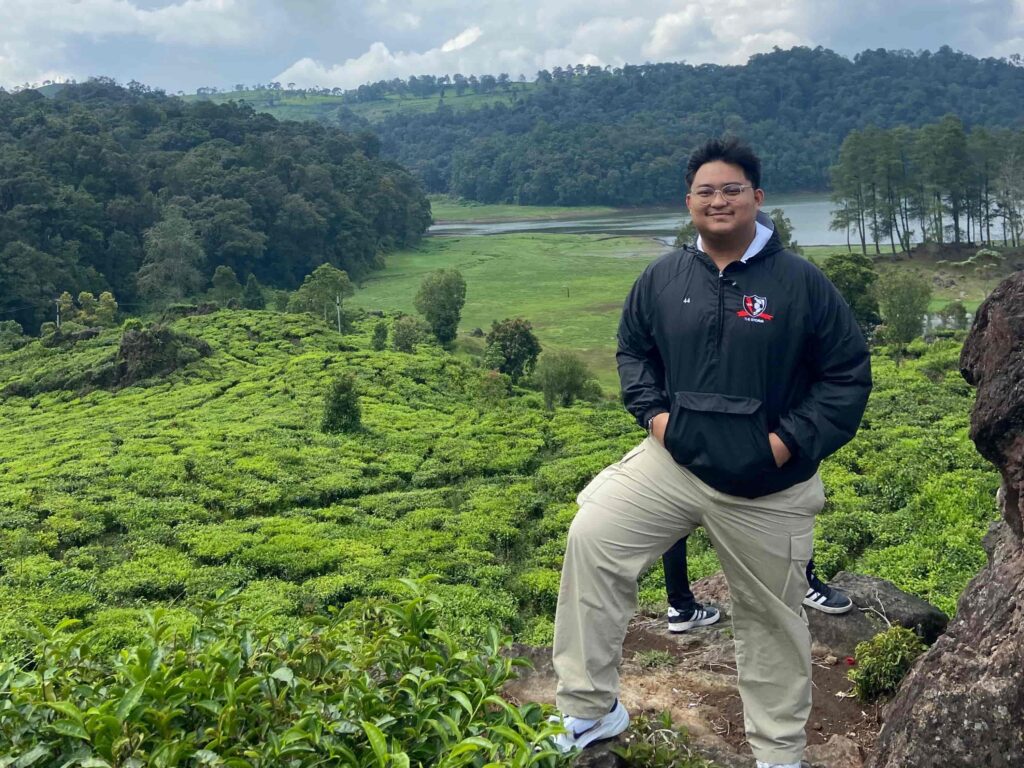
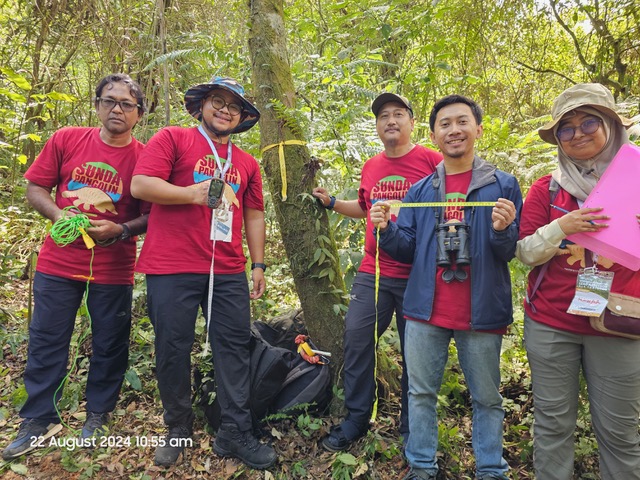
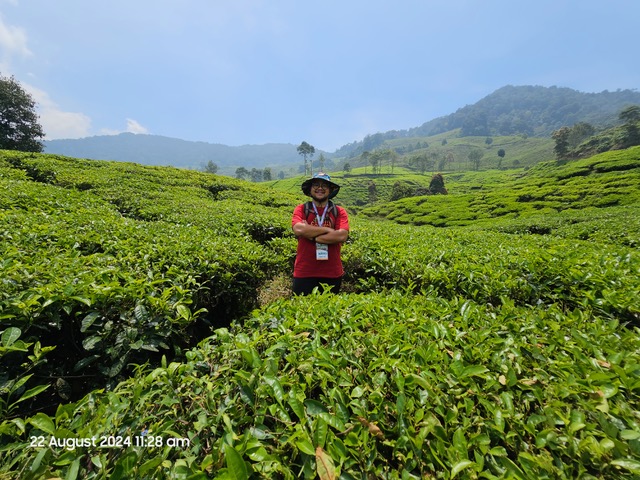
Blog Brunei’s First Licensed HCV/HCS Assessor Leads the Way in Conservation In December of this year, Syazwan Omar, known as “Wano,” achieved a major milestone by passing his final assessment for a High Conservation Value and High Carbon Stock (HCV/HCS) course. Wano is a graduate of Universiti Brunei Darussalam and holds both a Bachelor’s and a Master of Science in Geoscience from the institution. Passing his final assessment makes Wano the first provisionally licensed HCV/HCS assessor in Brunei Darussalam. HCV assessments have been used for the past two decades to identify and protect areas with high conservation value from land use change, often related to extractive industries and agriculture. The methodology is versatile and can be applied in a wide range of contexts, making it an ideal means of standardizing land use assessment and environmental protection. Wano is a leading environmental analyst at Borneo Futures, who joined the team after demonstrating his expertise in the first Brunei-wide environmental assessment for peat, which he completed in his final project to attain his master’s degree. Since joining Borneo Futures in 2023, his career has evolved toward a focus on environmental sustainability and citizen engagement, a shift that aligns perfectly with his recent certification. His passion for this field was evident in his enthusiastic participation in the HCV/HCS assessment course held in Bogor, Indonesia. Looking forward, Wano aspires to apply his training by conducting assessments in Indonesia and spearheading efforts to establish a domestic market for HCV/HCS assessments in Brunei. Brunei, with its rich biodiversity and extensive tropical forests, stands to benefit greatly from the adoption of HCV and HCS assessments. These tools help balance development with environmental and social priorities, offering significant advantages. HCV assessments can pinpoint critical habitats for rare and endemic species, ensuring their protection amid urban expansion or agricultural growth. HCS assessments complement this by identifying high-carbon areas, safeguarding Brunei’s forests as vital carbon sinks and supporting the nation’s climate commitments. Economically, these assessments enable sustainable policies that balance ecological integrity with growth, particularly in forestry and agriculture. Aligning with global sustainability standards enhances market access for products like timber and palm oil, which face increasing scrutiny for environmental compliance. Additionally, these tools address community well-being by considering the needs of local and Indigenous groups, fostering equitable land-use practices. Protecting high-value areas could further bolster Brunei’s ecotourism sector, showcasing its pristine forests and biodiversity.   While implementation of these assessments requires expertise, resources, and coordination among stakeholders, integrating them into Brunei’s land-use planning could position the country as a regional leader in sustainable development and conservation. Wano’s certification marks a crucial step in this direction, as it equips Brunei with local expertise to navigate these challenges and opportunities. In a recent interview, Wano shared insights into the intensive course that spanned a week and offered both theoretical and practical training. Hosted by Remark Indonesia, the course delved into the fundamentals of HCV/HCS assessments and provided hands-on experience through fieldwork, mock assessments, and group activities. Wano highlighted the emphasis on communication and teamwork, two pillars of a successful assessment process. Participants engaged in exercises such as designing “perfect” landscapes for evaluation, conducting patch analyses and land cover mapping, and practicing stakeholder consultations tailored to different audiences. On-site interviews were also conducted to assess resource use and biodiversity values. Notably, the course emphasized Free Prior and Informed Consent (FPIC), a principle integral to Borneo Futures’ projects. Aside from the ‘perfect’ landscapes, students were also assessed through continuous assessment of the theory learned throughout the course, as well as presentations of stakeholder consultations, including the outcomes and consultation process. The final assessment took the form of a group report, to mimic the conditions under which a standard HCV/HCS assessment would take place. The final assessment was submitted in September, with the results released in December. The overall grade was largely composed of this final assessment but factored in the assessments during the course too. To pass, students had to achieve a score of at least 70%. Wano, very impressively, scored 85% – an achievement to surely be proud of and a testament to his dedication to the subject matter and desire to succeed. Now in the probationary phase of his certification journey, Wano must submit two complete HCV/HCS reports to gain full accreditation as a fully licensed assessor. Drawing on his extensive connections in Indonesia through his work at Borneo Futures, he is optimistic about finding opportunities to fulfill this requirement. Wano’s achievement not only sets him up for future successes in Brunei and beyond but also represents a pivotal moment for the nation. As Brunei seeks to integrate sustainable practices into its development strategies, the groundwork laid by Wano and HCV/HCS assessments could catalyze its transformation into an active contributor to a global drive towards prioritizing conservation and sustainable land management.

Meet the Scientist

Meet the Scientist: Safwanah

Meet the Scientist Safwanah ‘Meet the Scientist’ is a short feature series in which we get to know the people behind the work done at Borneo Futures ‘Meet the Scientist’ is a short feature series in which we get to know the people behind the work done at Borneo Futures – who they are, where they came from, and where they are going. The voices of young and junior scientists are often lost in a sector often dominated by big names and institutions. This series aims to give back the voice to the changemakers of tomorrow and showcase the hard work they do to make Borneo Futures what it is today. In this first edition, I spoke with Safwanah Said, a leading spatial analyst at Borneo Futures. Safwanah first joined Borneo Futures in 2020, as a research officer with a focus on GIS Geospatial Mapping. Throughout her time at Borneo Futures, she has progressed through the ranks to become a confident spatial analyst taking a leading role in Land Use Change (LUC) analyses, mapping, and spatial elements of research studies and other projects. Safwanah’s primary interest at Borneo Futures is conducting critical habitat assessments, where she can use her varied skill base to determine the natural and modified habitat of a project area to generate multi- factorial maps. Safwanah developed her passion for GIS after taking a short module on the topic as part of her undergraduate studies in Environmental Sciences, which she completed in Brunei Darussalam. The module introduced her to ArcGIS and its applications. In her final year of study, where she was able to complete a semester abroad at Kings College London to study remote sensing. Her interest was sparked, but she had no avenues through which to explore it further. Later, Safwanah completed a master’s degree in Water Resources and Environmental Engingeering, where she could apply the knowledge and expertise she had gained during her undergraduate studies to complete a Master’s thesis that used GIS as a central component. Despite her strong foundation in GIS and spatial analysis, Safwanah entered the workforce with very few opportunities to apply her skills and unique interests. As a logical progression from her studies, Safwanah took a position as an environmental engineer at a local Bruneian company. However, she soon realised that this was not the trade for her. “It was not what I had expected. Environmental engineering, in practice, is very different to what we studied at university. I felt that it was far more technical and engineering-focused than I had imagined.” Still on the lookout for jobs in GIS, Safwanah came across an interesting call for a position at Borneo Futures. “I was really excited when the job opening came up. I was worried when I applied because I hadn’t worked in GIS before, but the mentorship I have received throughout my employment really helped and allowed me to do things I didn’t think I could.” Safwanah believes that working at Borneo Futures has broadened her horizons. She wishes that there were more opportunities like this in Brunei, not only from a GIS perspective but also as a company that actively engages with a range of actors from different countries and sectors. She comments that before joining Borneo Futures, she had never wanted to leave Brunei, but having been involved in projects abroad and seeing team members further their studies and careers in places such as Singapore, has introduced her to many more opportunities and allowed her to recognize that her options are not limited to what Brunei has to offer. When asked about aspirations for the future, Safwanah lit up. She has a lot of plans and great ambitions. It is obvious she is truly inspired by her work. In the short term, Safwanah would like to be involved in more research studies with a larger contributing role that could see her as one of the leading names on an article. She is also very interested in the ongoing High Conservation Value (HCV/HCS) work at Borneo Futures and, through her personal research, has found that there is a growing market for HCV assessments in Southeast Asian countries, including Brunei. “I was surprised and happy to learn that the Bruneian government is placing a growing emphasis on the value of HCV assessments. I want to start looking at these jobs early and making sure I am prepared and a highly skilled candidate.” Knowing that there are few opportunities for spatial analysts in Brunei, let alone HCV specialists, Safwanah is excited about the prospect of being a candidate with significantly more experience than others, especially in the environmental realm. However, Safwanah’s eyes are set on furthering her education first. “I would like to pursue another Master’s degree that highlights my knowledge of GIS and remote sensing. It’s easy to say that you have experience from a job, but having a qualification seems more official and a guarantee that you have the skills.” Ultimately, Safwanah would like to become a certified GIS professional, for which she would need to complete a course and pass a certification exam. She believes that attaining a professional certification would open up even more opportunities for her, including those abroad, but also recognizes that it would be good for Borneo Futures to have a GIS specialist on the team. At the moment, these goals still seem daunting to Safwanah, but she feels that having worked at Borneo Futures with such a close team has helped her to build her confidence. She believes that after completing her short-term goals at the Company she will have the courage and ability to take on something challenging and out of her comfort zone.

Meet the Scientist

Meet the Scientist: Wano

Meet the Scientist Wano ‘Meet the Scientist’ is a short feature series in which we get to know the people behind the work done at Borneo Futures ‘Meet the Scientist’ is a short feature series in which we get to know the people behind the work done at Borneo Futures – who they are, where they came from, and where they are going. The voices of young and junior scientists are often lost in a sector often dominated by big names and institutions. This series aims to give back the voice to the changemakers of tomorrow and showcase the hard work they do to make Borneo Futures what it is today. In this edition, I spoke to Wano, an environmental analyst and external engagement coordinator at Borneo Futures. A valued member of the team, Wano works across several projects related to conservation and sustainability, with a focus on geospatial science. He is currently taking the lead on Borneo Futures’ pilot program, the Orangutan Guardians, where we are working to monetize and incentivize community-based biodiversity monitoring and protection. Wano is principally a geospatial expert, having studied geology at the undergraduate level and geosciences at the postgraduate. Wano’s Master’s thesis involved a Brunei-wide analysis of peat soils; a group project that he led and the first study of its kind in Brunei. He tells me that the study also went against the perception in Brunei that the only pathway for geology graduates is a career in oil and gas. He knew, after completing the study, that he saw himself working in the field with people and the environment, not stuck in an office conceptualizing organic chemistry. Wano started his career in a financial institution, but quickly changed paths when Borneo Future’s contacted him with regards to his peat soils study. “I wanted to go back to my roots. It was an easy decision”. As a new company in Brunei, Wano was slightly sceptical about taking on a full-time position at Borneo Futures, but with the offer of lots of projects coming in, such as the Orangutan Guardians, PENDAKI review, and working on the IUCN report on the vegetable oil industry, he knew he had made the right decision. Initially, Wano’s focus was on geology, but the range of projects he has been involved in has exposed him to a range of subject areas which he finds interesting, including sustainability, land use change and, most recently, High Conversation Value/High Carbon Stock (HCV/HCS) assessments. The latter was the reason for a recent trip to Indonesia, where Wano completed a training course to become a certified HCV/HCS assessor. He found the experience very rewarding, and loved Indonesia; so much so that he would very seriously consider working there. During his 18 months at Borneo Futures, Wano has grown into the position and taken everything in his stride. He has pushed himself out of his comfort zone and undertaken projects he never thought he would. His proudest achievement was his very first project, a climate risk assessment to which he devoted a huge amount of time. He also found great value in digitizing the maps for the Orangutan Guardian project, particularly when he visited the communities and found how much they appreciated his work. Moving forward, Wano says he would like to be involved in more soil science and peat studies, as this is his area of expertise. He also believes that there is significant potential for using AI within Borneo Futures to optimize our projects, and would like to be involved in such a programme should the opportunity arise. When he becomes a certified HCV/HCS assessor, of which he would be the first in Brunei, he would like to take the lead in undertaking and seeking out these assessments for the company. When asked about a future beyond Borneo Futures, Wano tells me he would like to work at the intersection of conservation and geology, as he predicts a gap in the market that will desperately need to be filled in the near future. He also wants to further his skills in environmental policy and working with communities to promote conservation. Ultimately, however, Wano wants to be seen as a reliable professional that anyone can trust to get the job done. It was a pleasure to speak to Wano, and he strikes me to be someone with great ambition. He left me with some key insights into conservation that truly resonated with me and are wholly applicable to not only the environmental sector but all those who wish to address global problems at the local level. “Conservation is so interdisciplinary – we cannot address one element without considering the others. A lot of people look at conservation as a preservation of nature but it’s really about making sure that people and the environment can co- exist. Like the orangutan guardians, they live there, they experience the environment. Who are we to tell them what to do? Scientists and policymakers need to change our ways and focus on helping communities to help the environment.”

Meet the Scientist

Meet the Scientist: Thina

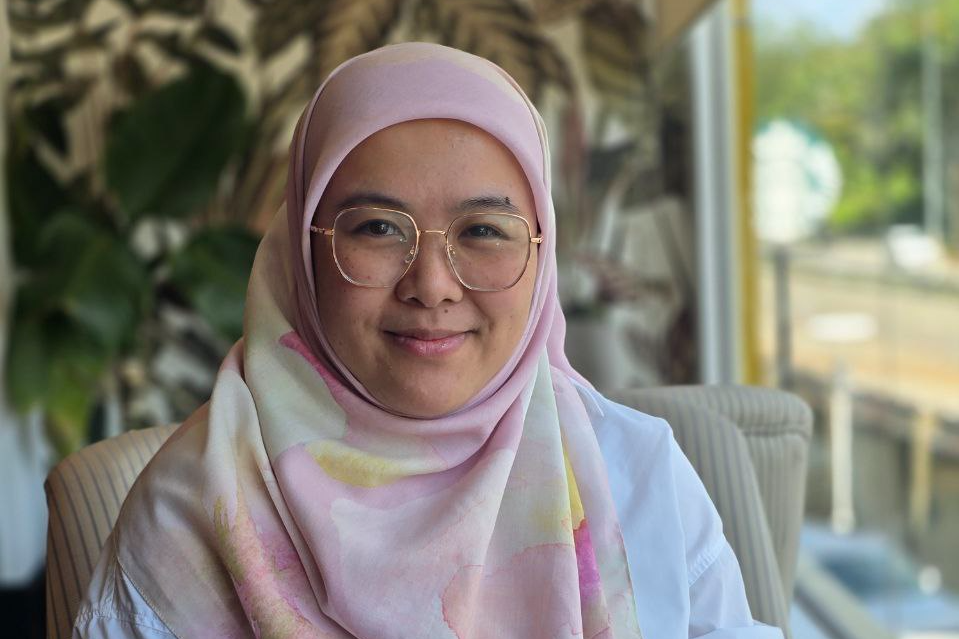
Meet the Scientist Thina ‘Meet the Scientist’ is a short feature series in which we get to know the people behind the work done at Borneo Futures ‘Meet the Scientist’ is a short feature series in which we get to know the people behind the work done at Borneo Futures – who they are, where they came from, and where they are going. The voices of young and junior scientists are often lost in a sector often dominated by big names and institutions. This series aims to give back the voice to the changemakers of tomorrow and showcase the hard work they do to make Borneo Futures what it is today. In this special edition, I spoke to Thina Ariffin, who is currently on sabbatical from Borneo Futures to pursue her Master’s in Biodiversity Conservation and Sustainability at the prestigious National University of Singapore. We caught up via video call from the University library in a rare free moment within Thina’s intense and demanding study schedule. Thina joined Borneo Futures in 2020 as a part-time research assistant, and later took on a full-time role in 2021 as an environmental analyst and external engagement coordinator, where she worked closely with the directors to establish first contact with stakeholders, environmental consultancies, and communities. Prior to Borneo Futures, Thina held a job in occupational health and safety. She tells me that this was not her preferred profession, but as many other team members have commented, the career market in Brunei is limited – “finding a job in the environment sector is almost impossible”. Having studied environmental science and technology at Universiti Putra Malaysia, Thina was intrigued when she saw an opening at Borneo Futures and knew she had to apply. Her employment introduced her to the possibilities of work related to conservation, the environment, and sustainability, and helped to develop the skills she gained in her undergraduate studies as well as allow her to find her niche, which has led to her pursuing her current Master’s. Thina’s proudest achievement during her time at Borneo Futures was leading the Baseline Study of Sun Bears in Brunei, a collaborative effort with the government and university. Under the supervision of Professor Erik Meijaard, Thina coordinated a country-wide interview survey on the species, which led to the development of a conservation priority map and key recommendations for future conservation efforts. This project not only allowed her to work closely with diverse stakeholders but also deepened her understanding of conservation science in action.    As for the future, she isn’t sure, but she’s grateful for the experience she gained at Borneo Futures and the work helped her to discover her passion first ignited in a small high school project on sustainable materials. She values continuous learning and professional development and believes that this will set her up for a long and rewarding career. Right now, she tells me, she is just trying to survive her degree and come out with the best results she can. Ultimately, Thina sees herself working at the interface of environment and policy. Baseline Study of Sun Bears in Brunei Darussalam cover page

Scroll to Top