
KehatiKu

Blog, KehatiKu

Choosing Conservation: A Community’s Decision to Protect Its Wildlife

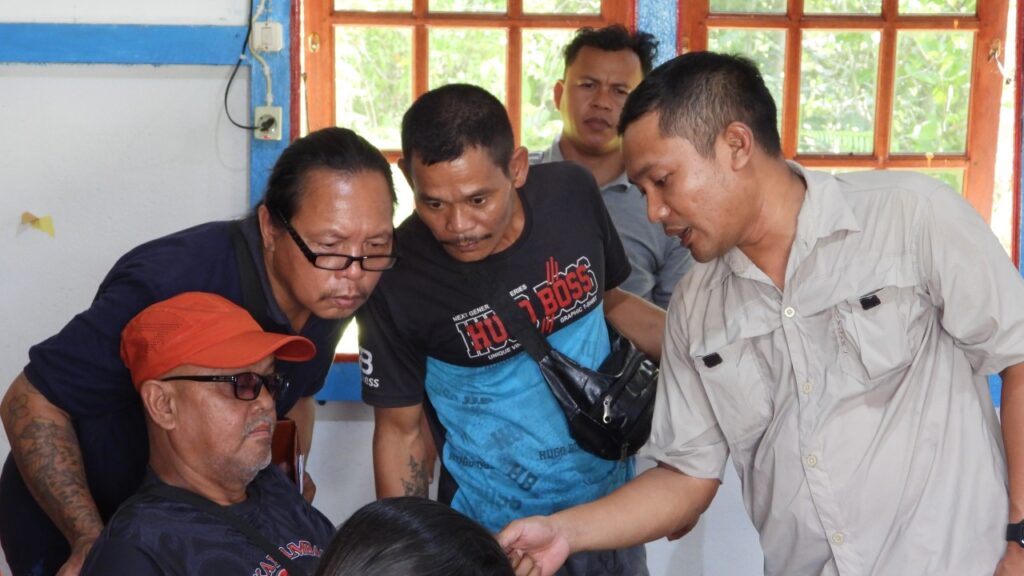
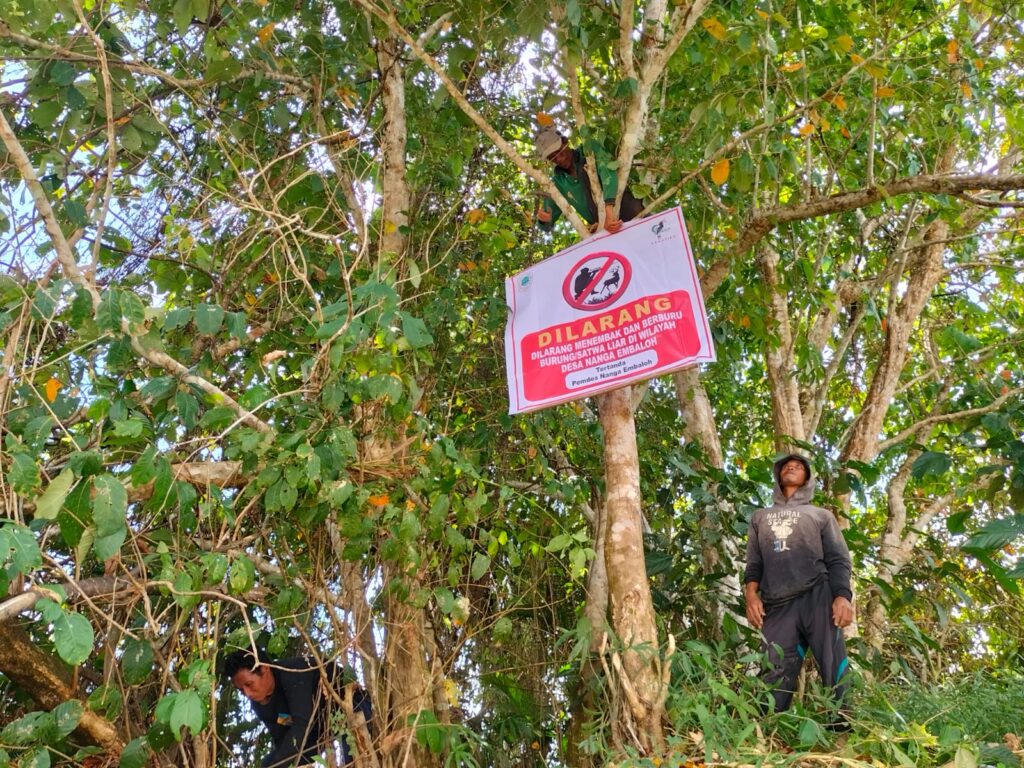
Blog Choosing Conservation: A Community’s Decision to Protect Its Wildlife A sign of change: Nanga Embaloh’s self-imposed hunting ban protects wildlife and reflects growing community stewardship. In the remote village of Nanga Embaloh, deep in West Kalimantan along the floodplain of the meandering Kapuas River, daily life has long been shaped by isolation, limited infrastructure, and reliance on the surrounding forest and rivers. But in late 2025, a quiet shift took place when a new and somewhat unconventional livelihood option, KehatiKu, arrived in Nanga Embaloh. What began as a way to supplement income has grown into something more: a community-driven effort to observe, value, and ultimately protect the wildlife that surrounds them. Through this community-based wildlife monitoring system, villagers voluntarily submit observations and receive direct payments for verified wildlife recordings. With approximately 800 participants across nine villages, the programme generates around 200,000 wildlife observations each year. This volume of data is sufficient to develop occupancy estimates of wildlife occurrence and to measure change over time, and say something meaningful about wildlife populations. In turn, KehatiKu empowers communities to monitor their own wildlife, become custodians of their wildlife data, and strengthen their position in discussions with government and private sector actors when decisions about the future of their forests and land are made. This model is already shaping how communities like Nanga Embaloh perceive wildlife and interact with their environment to the point where wildlife becomes a village asset worth protecting. A Remote Community, A New Opportunity Nanga Embaloh is a rural village in the Embaloh Hilir District of Kapuas Hulu Regency in West Kalimantan, with limited connectivity to other villages and larger towns. For years, the village has been advocating for a 31 km road to connect it to Nanga Mandai, a nearby village, but substantial budget constraints have hindered development. The village is home to 1,236 inhabitants across 350 households. The average monthly income is Rp 1,500,000 (approximately USD 88.50), although high-earning kratom farmers can earn between USD 544 and USD 690 per month during harvest times (Supriadi et al., 2023). Before 2017, many villagers were rubber farmers and fishermen, but there was a significant shift towards kratom farming. Kratom is a tropical tree native to Southeast Asia, harvested for its stimulant and sedative properties. In powdered form, it sells for USD 6–15 per 30 g in international markets. Since 2023, Nanga Embaloh has been participating in the national ‘Kampung Nelayan Merah Putih’ programme, which aims to develop and modernise coastal and fishing villages into more productive and integrated settlements. KehatiKu now offers a reliable primary or secondary income to villagers, who can voluntarily collect wildlife observations at their convenience. New Livelihood Options in Nanga Embaloh   Bapak Toni Espendi is a committed, regular KehatiKu contributor, despite having only started submitting observations in late 2025. He first heard of the initiative from Borneo Futures’ local facilitator, Andi Erman, and people from the neighbouring village, Nanga Palin, which first started participating in KehatiKu in May 2025. Pak Toni, from Nanga Embaloh, using a telelens connected to his smartphone to improve the quality of his observations He tells us that before he first started submitting observations, he rarely went into the forest. However, once he began to learn more about local species and where they could be found, making observations became part of his daily routine.   Being particularly interested in birds, Pak Toni typically sets off early in the morning to look for species in the forest and returns around noon. He then goes out again in the afternoon and ends his ‘shift’ at sunset. Through months of careful observation, he has managed to pinpoint the times and locations where species are most common, making his trips to the forest fruitful opportunities for additional income alongside his main occupation, farming. “Economically, it helps support my children and household needs – covering school expenses, food, electricity, and other daily necessities. The additional income also motivates me to continue making observations. I also bought four camera lenses with my earnings, which have really helped improve the quality of the photos I take.” Another interviewee from Nanga Embaloh, Ibu Susi, short for Susilawati, also used her income from KehatiKu to purchase a camera lens to improve the quality of her observations and increase the proportion of which she received payment. Ibu Susi, a KehatiKu observer from Nanga Embaloh, whose involvement has enabled her to learn more about wildlife and to support her family financially She tells us that the lens has been very useful for her and has allowed her to earn a meaningful income alongside her farming work. She usually makes observations while accompanying her husband at the farm or on days off. “At first, I did not know much about birds or wildlife. As a woman, I rarely entered the forest. But since this program started, I have become more aware and curious about the birds that exist around us.” She lights up when asked about her most memorable observation. “My friends and I found a drongo and a hornbill. It was my first time seeing a drongo, so I felt quite proud. I hope the program can continue because it provides benefits and encourages people to participate.” Pak Toni shares this enthusiasm, with his proudest observation being that of a hornbill, as they are rare, difficult to photograph, and often perched in tall trees. Choosing Conservation   What currently sets Nanga Embaloh apart from other villages involved with KehatiKu is the autonomous declaration of a hunting ban in the area, in response to high community involvement and recognition of the resulting community-wide socioeconomic benefits.   In February 2026, village representatives called for a meeting with the village head, head of the subdistrict and representatives from the army and police. They wanted to know whether it is legally possible to ban outsiders and villagers from hunting or collecting wildlife. As wildlife is now an important source of income, they did not want anyone to reduce the populations.   In the

Blog, KehatiKu

KehatiKu: Where Wildlife Conservation Pays

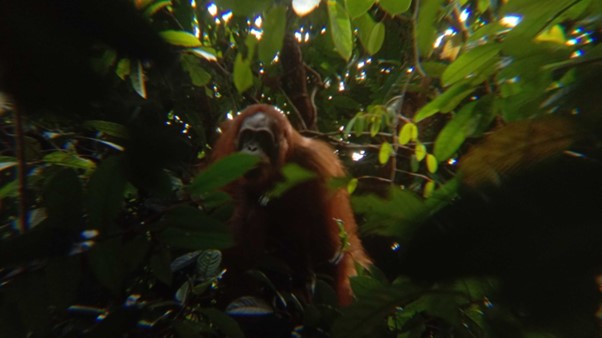
Blog KehatiKu: Where Wildlife Conservation Pays Pongo pygmaeus, photo taken by KehatiKu observers using telephoto lens What if protecting wildlife could also provide a reliable monthly income? In West Kalimantan, it already does. KehatiKu is Borneo Futures’ flagship community-based wildlife conservation pilot, which tests a novel approach to collecting species data. The concept is based on citizen science, where non-specialists are the data collectors. KehatiKu provides real-time wildlife population metrics through continuous opportunistic and voluntary data collection by local community members, with the ultimate goal of supporting effective, outcome-based conservation. Strengthening our understanding of species presence in human-altered landscapes is fundamental to supporting locally led and autonomous conservation initiatives. The pilot began in 2024 and was initially trialled in four villages in the Kapuas Hulu, West Kalimantan. By the end of 2025, five more villages had joined KehatiKu, bringing the total number of unique observers to 800 as of February 2026. The model is simple: observers voluntarily and opportunistically gather wildlife records during routine activities in and around their villages, usually using their mobile phones. These records, called observations, may be photos, videos, or sound recordings; the latter are often used for hard-to-see species, such as gibbons and many birds. Observations are uploaded, either directly or retrospectively, to the KehatiKu mobile app and sent to our team of in-house and remote biodiversity experts, who verify each one. Once verified, a direct payment is released to the observer, with amounts based on the rarity of each species and the difficulty of observing them. These data also enable our team to conduct occupancy analyses of individual species, creating comprehensive maps that contribute to a growing database of species presence across the landscape. Occupancy map of Bornean orangutan in the area currently covered by KehatiKu, generated by Borneo Futures’ statisticians and the geospatial team Through this process, KehatiKu helps observers gain sustainable and reliable income while recognising the rainforest’s value beyond raw materials. Ultimately, we hope forests and their wildlife will be valued more for conservation than exploitation, and positive signs are already emerging. Some communities have taken the initiative to ban hunting locally to protect the species they record for income. Designed to Last: Local Ownership as a Path to Financial Security Maintaining a continuous feedback loop is vital to KehatiKu’s long-term success; it must belong to the observers—their movement, their responsibility, their benefits. Our local coordinator visits villages regularly, and every few months, members of Borneo Futures’ team from Brunei conduct site visits to assess how KehatiKu is functioning, address concerns, and engage in dialogue with observers about the species recorded. KehatiKu coordinator, Muhammad Syazwan Omar, trains local observers in making and uploading observations to the KehatiKu data collection platform In a recent visit, our team spoke with four observers from Sungai Ajung, a member village: Bu (Mrs) Uneng, who, as of February 2026, has participated in the KehatiKu for eight months; Pak (Mr) Bantan, a long-term observer who started collecting observations in early 2024; Bu Novi, who has been with KehatiKu for eight months; and Bu Gubah, an observer for just over a year. Sungai Ajung is a remote Dayak village, three hours from the district capital, Putussibau. It has nearly 400 residents, 57% of whom are farmers. Nearly 60% of residents have not attended school, and the average annual income per person is USD 740 (Rp 12.5 million). The community sources much of its water and other resources, like firewood, from the surrounding forests. Despite the remoteness, 40% have access to a smartphone, enabling many to become KehatiKu observers. All four observers we interviewed decided to join KehatiKu after seeing neighbours and people in other villages earning better incomes from observations, which helped improve their household economies. Bu Uneng, a KehatiKu observer from Sungai Ajung village Before joining KehatiKu, Bu Uneng worked as a community health volunteer. She notes that her earnings from KehatiKu are significantly higher than her previous income, making it easier to support her family. “I feel much calmer and more independent now, because besides my husband’s income, I can earn my own income every month through observations.” Meanwhile, Pak Bantan, who worked as a village official and tended a small garden, now earns enough from verified observations to comfortably meet household expenses. He highlights the regular, direct payments as making KehatiKu a more reliable income source than his previous job. He also notes that KehatiKu fosters community spirit, with members pooling money to buy items that support their activities. Both Bu Novi and Bu Gubah still work their previous jobs but use KehatiKu to supplement their income, saving for the future and their children’s needs while covering household expenses. “KehatiKu gives me a more stable income than my other work, so I am calmer now that I can save money for my children’s futures,” says Bu Novi. The income earned through verified observations is mainly used for household expenses, including children’s schooling and essentials. Observers also save money for future needs and support others in their village, reflecting the broader community benefits. KehatiKu has also shifted perspectives on forest value. The forest is no longer seen solely as a source of timber, firewood, or building materials, but as a living ecosystem whose wildlife has measurable economic and ecological worth. As Pak Bantan explains: “Every animal we observe plays an important role in maintaining nature’s balance, so I care more and want to help protect and preserve it alongside other villagers.” “Thank you to KehatiKu. Besides protecting the forest, we can also earn income. I hope it continues,” concludes Bu Uneng. As KehatiKu expands as a movement to make wildlife conservation more transparent while benefiting those closest to wildlife, so too does the possibility of a different future for the forests of West Kalimantan. One where communities are not only stewards of the rainforest, but beneficiaries of its protection. With every observation uploaded and every species recorded, KehatiKu is proving that when wildlife conservation creates real value for local people, protecting nature becomes not just

Blog, KehatiKu

Citizen Science Origins

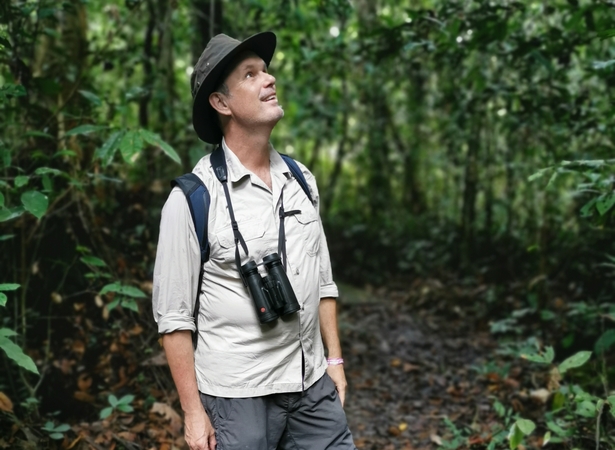
Blog Citizen Science Origins Borneo Futures Director, Erik Meijaard, has long been working on the idea of using citizen science to better inform adaptive biodiversity management. It all started in 2005 when, on a routine visit to train biodiversity experts at a timber concession, Erik realised that those who truly knew where and what the species were were not the experts, but the staff on the ground spending day in and day out in the forests. This observation sparked a simple but powerful question: Why does so much of this knowledge go unrecorded, and how could we develop systems to collect it more effectively? From here, Erik entered discussions with Borneo Futures Co-Director, Rona Dennis, to formalise a system whereby anyone could monitor biodiversity and contribute to a more comprehensive database of observations. At the time, Rona was working in environmental risk assessment for a multinational mining company with exploration sites in Indonesia. She took the concept to her seniors and partnered with a colleague to roll it out across the Indonesian project. The trial was a huge success, surpassing expectations and acting as a crucial proof of concept. Senior management praised the initiative, recognising the benefit it brought for their sustainability commitments through widespread engagement with conservation and a record number of new species sightings. People began to get excited about conservation. When the company unexpectedly closed its Indonesian projects, Rona and Erik were committed to citizen science and weren’t going to let it disappear with the loss of their major pilot. Instead, they turned to alternative avenues. Erik had been working with palm oil producer ANJ since 2011 and looked to integrate this approach into an oil palm landscape. The first attempt failed due to a lack of integration into company policy. However, with Rona’s expertise in creating formal systems, they tried again. In 2019, ANJ began deploying the project across its seven estates in Indonesia. This project, which garnered great praise over five years of implementation, was dubbed PENDAKI, a name signifying care for the environment. The outcomes were remarkable: over 190,000 species sightings so far, including many new records, and strong staff engagement. “The social benefits of PENDAKI demonstrated the importance of community engagement because, without it, biodiversity will always be a siloed activity or afterthought.” This spurred a shift towards community-based systems. Initial interest was modest, but participation surged once incentives were introduced. Villagers were given tablets to view their own observations and told that if they recorded 600 sightings, they could keep the device, a target they initially doubted, but met with ease. When a payment system was later introduced, the numbers skyrocketed, with each village now contributing between 6,000 and 7,000 observations every month. Now well established and thriving, the project’s ambition extends beyond collecting wildlife data to changing mindsets about biodiversity. Through its incentive programme, the aim is to make conservation more valuable than poaching. The long-term goal is to expand the model across communities and companies, and embed it into government programmes such as Dana Desa in Indonesia, where villages that protect biodiversity could receive premium payments. With a target of 50 project sites by 2028, a milestone expected to be easily met, the project is attracting growing interest from both companies and communities. This balance is crucial, as it demonstrates that the approach is low-cost compared to traditional methods, yet generates far more data that can be transformed into near-real-time insights on the impact of conservation activities. Such immediacy is rare in the sector, where few investors in conservation ever see the direct effects of their actions. Understanding why people choose to participate, whether for financial reward, recognition, or the satisfaction of helping the planet, is key to sustaining this momentum. The approach is scalable, adaptable, and targeted, “a radical redesign of conservation incentives at scale,” as its creators describe. “Just imagine, what if conservation paid better than poaching?” Challenges remain, especially in keeping up with technological updates, but the potential is undeniable. Citizen science is proving to be a true innovation for conservation, transforming local knowledge into national impact and showing that when communities lead, biodiversity thrives.

Scroll to Top