
Verifying Borneo’s Biodiversity: Where Technology Meets Human Expertise
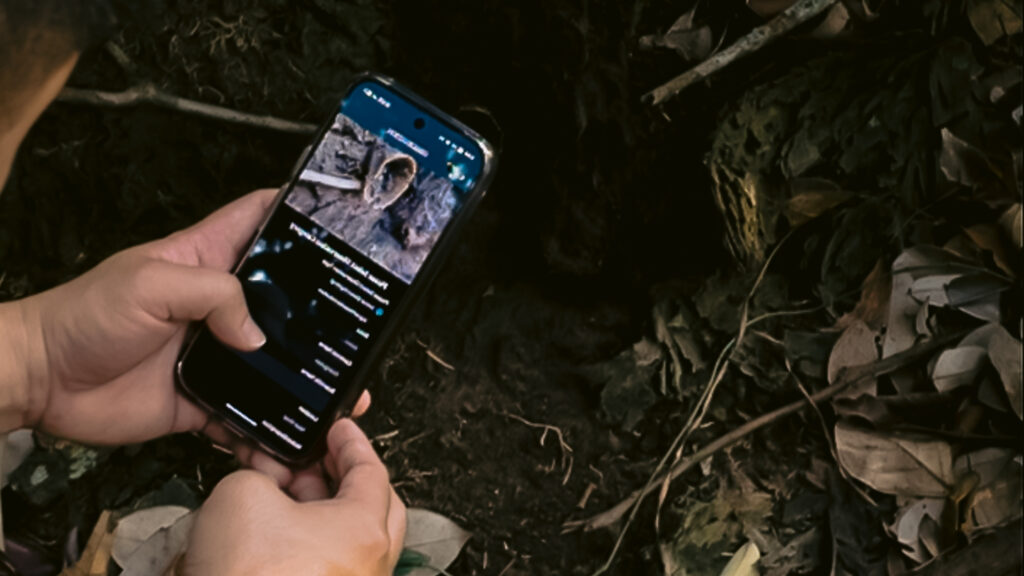
Verifying Borneo’s Biodiversity: Where Technology Meets Human Expertise The power of citizen science lies in the sheer scale of biodiversity data that non-specialists can generate; verification is what makes those observations scientifically reliable. In an incentivised citizen science programme, such as KehatiKu, verification is also one of the most important and resource-intensive parts of the system. Every observation must be assessed before it can be accepted into the verified dataset and a payment made to the observer. The verification system has evolved significantly since commencement two years ago. The project lead explains that, at the start of the project, verification was relatively straightforward, with only 30–50 observations submitted each month. At the time, the payment system was in a testing phase and only applied to observations of orangutans and orangutan nests, and verifications were performed manually using an Excel spreadsheet. Burung Nendak (Copsychus malabaricus), Labian, photo by: Marselinus Linus Once we were confident that the incentive-based approach was working and generating sustained community participation, additional species were selected through consultation with participating communities to reflect local priorities. These included culturally significant species, particularly traditional omen species, as well as species of conservation importance. As the programme grew, we also needed a more systematic way to manage the verification process. Our lead developer therefore created the KehatiKu dashboard, now the foundation of our verification work. The dashboard provided a centralised system for verification, allowing multiple users to support and oversee the process. KehatiKu Dashboard – verification view The publication of the dashboard coincided with a ‘special month’, when payments were also included for observations of plants, fungi, and orchids. The response was dramatic, with observations reaching up to 20,000, creating a significant verification backlog that warranted a transformation of the system. At this point, only two members of the team were performing manual verifications, but we brought on three new biodiversity staff to help clear the backlog. A new grant from the Arcus Foundation enabled KehatiKu to expand into five additional villages, substantially increasing the flow of observations. With the programme growing in both scale and complexity, it became clear that manual verification alone was no longer sustainable and AI-assisted verification would be essential. Tupai/Engkerabak (Callosciurus prevostii), Nanga Embaloh, photo by: Saiful Redha Parma Today, the core verification team consists of five members, supported by a network of external verifiers with regional or specialist taxonomic expertise. Together, the in-house team completes around 3,000 manual verifications per week, while external verifiers help reduce the workload and ensure observations can be processed efficiently and in a timely manner, particularly those eligible for payment. Our IT team is constantly working to enhance the programme’s AI capabilities as the volume and nature of the incoming observations evolves. The verification process is largely automated, meaning that every observation undergoes AI screening for species identification and potential issues such as clustering, while observations that cannot be confidently verified by AI proceed to manual review by the team. This data flow has dramatically reduced the verification burden. Despite the significant benefits AI has brought to the programme, the team is quick to highlight that AI will never replace human expertise. People are still needed to review uncertain or unusual observations, check the accuracy of automated decisions, and continually improve the system as new challenges emerge. As the team leader explains it, “AI improves efficiency, it doesn’t replace people.” Kera Ekor Panjang (Macaca fasciularis), Nanga Palin, photo by: Winda Saputri This human role becomes even more important with the introduction of our new flagship mobile phone application, CAPAI, where the verification process is much more transparent. Observers are able to see the verification status of their submissions and receive feedback on observation rejections, making it crucial to have people at the other end of the system who can address grievances in ways that AI may not be able to. CAPAI is also set to improve our in-house verification process more broadly. The application improves data quality from the outset, looking for duplicate and fake observations, while its offline functionality ensures that time and location data are recorded automatically when an observation is made, regardless of connectivity, critical when most observations are made deep in the forest. Kangkareng Perut-putih (Anthracoceros albirostris), Nanga Embaloh, photo by: Edi Edi For the verifiers, one of the most rewarding aspects of the work is the opportunity to keep learning. Even with a background in biology, there is always more to discover, from learning about unfamiliar species to recognising local variations in bird calls. For some, the work also carries a particular sense of responsibility: as people from Borneo with backgrounds in biodiversity, they see value in contributing their knowledge to documenting the region’s wildlife. The work also provides an opportunity to apply academic knowledge in a way that has a tangible impact. As verified observations feed into occupancy modelling and species indices, the verification team can see how their work contributes to a much broader understanding of Borneo’s biodiversity. As one observation verifier put it, “It’s an honour to be part of the team that is bringing light to the biodiversity of Borneo while supporting the livelihoods of local communities.” While it can be time-consuming and repetitive, verification is ultimately rewarding work. By combining species knowledge, local expertise, technology, and analysis, the team can turn thousands of individual observations into reliable biodiversity data, and ultimately, a better understanding of Borneo’s biodiversity and the communities documenting it.