
Capai: Growing a Biodiversity Monitoring Ecosystem
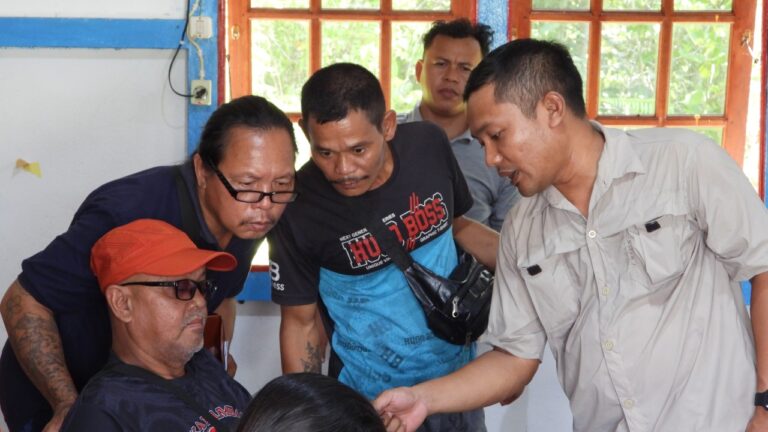
Building technology is one thing; seeing it adopted by the people it was designed for is another. In the final two weeks of July, Borneo Futures rolled out its proprietary Capai citizen science smartphone application across the nine villages currently participating in our KehatiKu community-based biodiversity monitoring programme.
Over the course of two weeks, the team travelled village to village, training observers and migrating them to the new app, marking a major milestone for the programme.

Capai forms the front end of the Borneo Futures biodiversity data platform, capturing field observations, and feeding them into an integrated pipeline for verification, analysis, and reporting. Developed entirely in-house, Borneo Futures is responsible for every aspect of the platform, from backend architecture and maintenance to ongoing feature development. The application lies at the heart of our growing technology division, which now employs 7 software developers, engineers and IT specialists.
The name Capai, meaning “to achieve” or “to reach” in both Malay and Indonesian, reflects the application’s purpose: helping communities achieve meaningful conservation outcomes while making biodiversity monitoring more accessible, accurate and rewarding.
One of the design priorities for Capai was ensuring reliable data collection in remote areas with limited internet connectivity. While many villages have mobile reception, observers often spend long periods making wildlife observations in remote forests without a signal. Previously, observations were only uploaded once participants returned to a village or found an internet connection, which could result in inaccurate locations.
Capai solves this problem through complete offline functionality. The moment an observation is made, its time and GPS location are permanently recorded on the device and cannot be altered afterwards. Once internet connectivity becomes available, the observation is uploaded automatically.

“The offline capabilities will have a huge benefit,” says Wano, KehatiKu Coordinator. “Not only does this improve the accuracy of data collection, but Capai also introduces secure account authentication linked to individual users, preventing users from creating multiple accounts and recording the same observation under different aliases.”
Security has also been built into the application from the ground up. Once observations have been successfully uploaded, precise GPS coordinates are automatically removed from the user’s device. This means that even if a phone were to be lost or stolen, sensitive species locations cannot be recovered. The entire platform has been designed as an auditable system, with multiple verification layers and clearly documented data flows, while also incorporating Free, Prior and Informed Consent (FPIC) principles and Standard Operating Procedures that promote safe and respectful interactions with wildlife.
According to Azizi, Borneo Futures’ Lead Application Developer, Capai has been designed with observers at its centre.
“We wanted to make the application as simple and intuitive as possible,” he explains. “Many of the processes now happen automatically behind the scenes.”
The interface adapts to both light and dark mode, supports Android devices (IOs-compatibility is in the making), and existing KehatiKu participants are currently having their historical observations migrated from the third party app previously used so they can continue using their existing records without starting again. The application itself continues to evolve, with new features being added as communities provide feedback.
Capai also gives observers far greater visibility over their own contributions. Participants can now follow the progress of every observation, from upload, through verification, to payment, in the case of the community program. They can view village leaderboards, track collective progress towards monitoring targets, access monthly newsletters, and compete for recognition through initiatives such as “Photo of the Month.”

“People really care about the photos of the month,” Wano explains. “Observers receive additional payments for these, and it gives everyone extra semangat, extra motivation.”
Digital payments are expected to be introduced over the coming year once an appropriate third-party payment mechanism has been integrated. Until then, payments will continue to be processed manually.
Even so, observers can already see exactly how much they have earned and when payments are expected, helping maintain the transparency that has been central to KehatiKu’s success.
While KehatiKu was the catalyst for Capai’s development, its applications extend far beyond a single programme. The platform has been designed as a flexible biodiversity monitoring system that can be adapted for community conservation programmes, research organisations and the private sector alike.
One of the first organisations to adopt the platform outside KehatiKu is HUTAN, a grassroots conservation and research organisation working in the Kinabatangan region of Sabah, Malaysia. HUTAN manages biodiversity monitoring across the Lower Kinabatangan Wildlife Reserve, a large area where traditional wildlife surveys can be challenging.

Syafiie, who leads Borneo Futures’ collaboration with HUTAN, recently travelled to Sabah to deliver training to one of HUTAN’s all-female reforestation teams. Although none of the participants had formal biodiversity training, they were eager to learn how to identify and record wildlife.
“The response was overwhelmingly positive,” Syafiie says. “They found the application very intuitive and easy to use.”
Unlike KehatiKu, HUTAN participants are not financially rewarded for observations. Instead, the application motivates participation through recognition and community engagement. Users can follow team rankings, celebrate top observers and best wildlife photographs, receive regular biodiversity newsletters, and monitor the collective progress of their team.
The platform is already being adapted for use by several private-sector clients in Sumatra. We are working both with independent smallholder farmers who are using the system to monitor both oil palm pests and wildlife, as well as major oil palm companies, where it supports biodiversity reporting and sustainability commitments alongside existing monitoring systems. In addition to wildlife observations generated by the app, the biodiversity data platform can incorporate camera trap data and high-resolution bird photography, creating a single platform capable of supporting many different approaches to biodiversity monitoring.
Ultimately, Capai represents far more than a new mobile application. It is the foundation of a growing biodiversity monitoring ecosystem, one designed to bring together Indigenous communities, villages, conservation organisations, researchers, smallholders and private companies through a single, transparent and scientifically robust platform. As the application continues to evolve, Borneo Futures hopes it will become a shared tool that enables many different people to contribute meaningfully to understanding and protecting biodiversity.