
Meet the Scientist
Wano
‘Meet the Scientist’ is a short feature series in which we get to know the people behind the work done at Borneo Futures
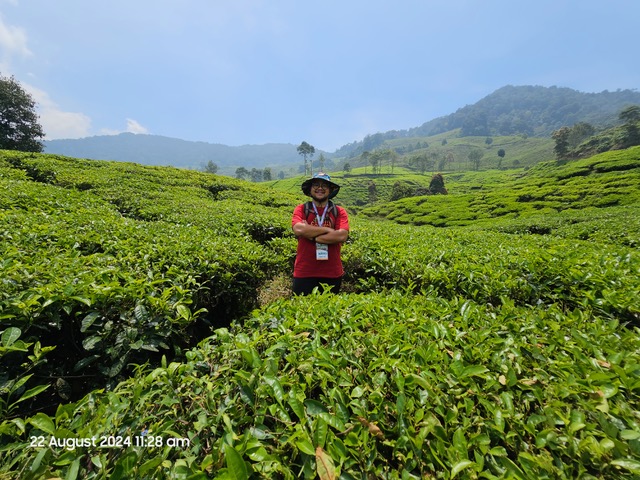
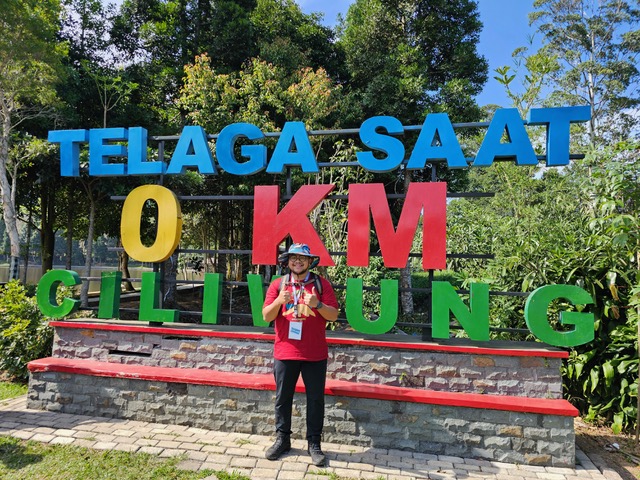
‘Meet the Scientist’ is a short feature series in which we get to know the people behind the work done at Borneo Futures – who they are, where they came from, and where they are going. The voices of young and junior scientists are often lost in a sector often dominated by big names and institutions. This series aims to give back the voice to the changemakers of tomorrow and showcase the hard work they do to make Borneo Futures what it is today.
In this edition, I spoke to Wano, an environmental analyst and external engagement coordinator at Borneo Futures. A valued member of the team, Wano works across several projects related to conservation and sustainability, with a focus on geospatial science. He is currently taking the lead on Borneo Futures’ pilot program, the Orangutan Guardians, where we are working to monetize and incentivize community-based biodiversity monitoring and protection.
Wano is principally a geospatial expert, having studied geology at the undergraduate level and geosciences at the postgraduate. Wano’s Master’s thesis involved a Brunei-wide analysis of peat soils; a group project that he led and the first study of its kind in Brunei. He tells me that the study also went against the perception in Brunei that the only pathway for geology graduates is a career in oil and gas. He knew, after completing the study, that he saw himself working in the field with people and the environment, not stuck in an office conceptualizing organic chemistry.
Wano started his career in a financial institution, but quickly changed paths when Borneo Future’s contacted him with regards to his peat soils study. “I wanted to go back to my roots. It was an easy decision”. As a new company in Brunei, Wano was slightly sceptical about taking on a full-time position at Borneo Futures, but with the offer of lots of projects coming in, such as the Orangutan Guardians, PENDAKI review, and working on the IUCN report on the vegetable oil industry, he knew he had made the right decision.
Initially, Wano’s focus was on geology, but the range of projects he has been involved in has exposed him to a range of subject areas which he finds interesting, including sustainability, land use change and, most recently, High Conversation Value/High Carbon Stock (HCV/HCS) assessments. The latter was the reason for a recent trip to Indonesia, where Wano completed a training course to become a certified HCV/HCS assessor. He found the experience very rewarding, and loved Indonesia; so much so that he would very seriously consider working there.
During his 18 months at Borneo Futures, Wano has grown into the position and taken everything in his stride. He has pushed himself out of his comfort zone and undertaken projects he never thought he would. His proudest achievement was his very first project, a climate risk assessment to which he devoted a huge amount of time. He also found great value in digitizing the maps for the Orangutan Guardian project, particularly when he visited the communities and found how much they appreciated his work.
Moving forward, Wano says he would like to be involved in more soil science and peat studies, as this is his area of expertise. He also believes that there is significant potential for using AI within Borneo Futures to optimize our projects, and would like to be involved in such a programme should the opportunity arise. When he becomes a certified HCV/HCS assessor, of which he would be the first in Brunei, he would like to take the lead in undertaking and seeking out these assessments for the company.
When asked about a future beyond Borneo Futures, Wano tells me he would like to work at the intersection of conservation and geology, as he predicts a gap in the market that will desperately need to be filled in the near future. He also wants to further his skills in environmental policy and working with communities to promote conservation. Ultimately, however, Wano wants to be seen as a reliable professional that anyone can trust to get the job done.
It was a pleasure to speak to Wano, and he strikes me to be someone with great ambition. He left me with some key insights into conservation that truly resonated with me and are wholly applicable to not only the environmental sector but all those who wish to address global problems at the local level.
“Conservation is so interdisciplinary – we cannot address one element without considering the others. A lot of people look at conservation as a preservation of nature but it’s really about making sure that people and the environment can co- exist. Like the orangutan guardians, they live there, they experience the environment. Who are we to tell them what to do? Scientists and policymakers need to change our ways and focus on helping communities to help the environment.”