
Blog
KehatiKu: Where Wildlife Conservation Pays
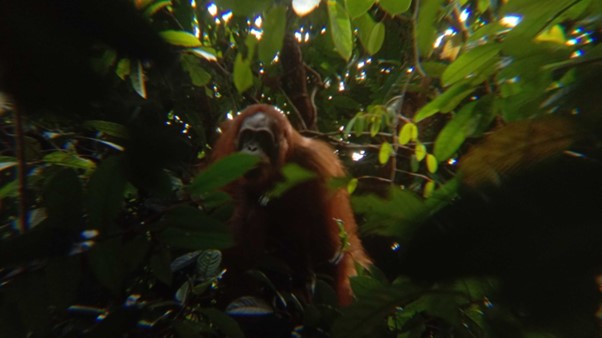
Pongo pygmaeus, photo taken by KehatiKu observers using telephoto lens
What if protecting wildlife could also provide a reliable monthly income?
In West Kalimantan, it already does.
KehatiKu is Borneo Futures’ flagship community-based wildlife conservation pilot, which tests a novel approach to collecting species data. The concept is based on citizen science, where non-specialists are the data collectors. KehatiKu provides real-time wildlife population metrics through continuous opportunistic and voluntary data collection by local community members, with the ultimate goal of supporting effective, outcome-based conservation.
Strengthening our understanding of species presence in human-altered landscapes is fundamental to supporting locally led and autonomous conservation initiatives.
The pilot began in 2024 and was initially trialled in four villages in the Kapuas Hulu, West Kalimantan. By the end of 2025, five more villages had joined KehatiKu, bringing the total number of unique observers to 800 as of February 2026.
The model is simple: observers voluntarily and opportunistically gather wildlife records during routine activities in and around their villages, usually using their mobile phones. These records, called observations, may be photos, videos, or sound recordings; the latter are often used for hard-to-see species, such as gibbons and many birds.
Observations are uploaded, either directly or retrospectively, to the KehatiKu mobile app and sent to our team of in-house and remote biodiversity experts, who verify each one. Once verified, a direct payment is released to the observer, with amounts based on the rarity of each species and the difficulty of observing them.
These data also enable our team to conduct occupancy analyses of individual species, creating comprehensive maps that contribute to a growing database of species presence across the landscape.
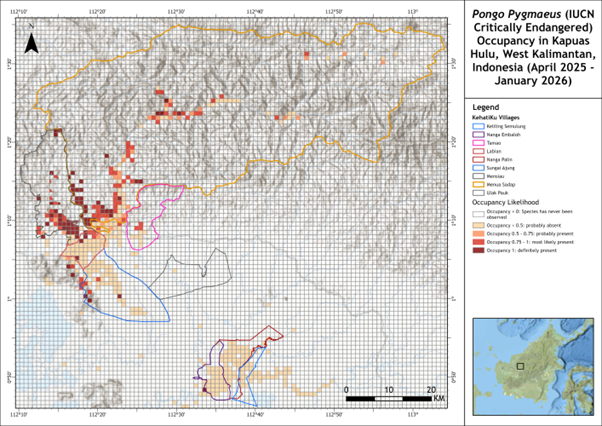
Through this process, KehatiKu helps observers gain sustainable and reliable income while recognising the rainforest’s value beyond raw materials. Ultimately, we hope forests and their wildlife will be valued more for conservation than exploitation, and positive signs are already emerging. Some communities have taken the initiative to ban hunting locally to protect the species they record for income.
Designed to Last: Local Ownership as a Path to Financial Security
Maintaining a continuous feedback loop is vital to KehatiKu’s long-term success; it must belong to the observers—their movement, their responsibility, their benefits. Our local coordinator visits villages regularly, and every few months, members of Borneo Futures’ team from Brunei conduct site visits to assess how KehatiKu is functioning, address concerns, and engage in dialogue with observers about the species recorded.
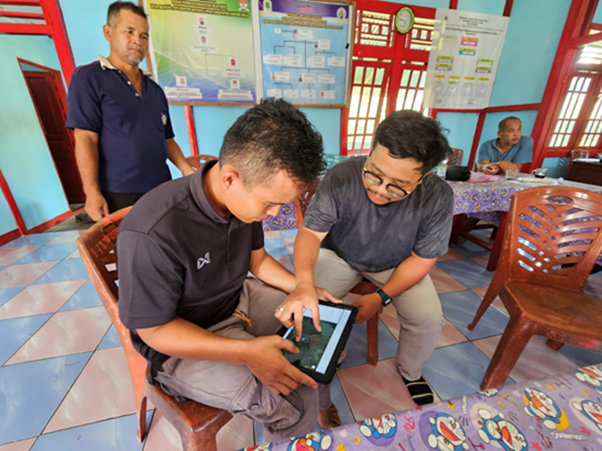
In a recent visit, our team spoke with four observers from Sungai Ajung, a member village: Bu (Mrs) Uneng, who, as of February 2026, has participated in the KehatiKu for eight months; Pak (Mr) Bantan, a long-term observer who started collecting observations in early 2024; Bu Novi, who has been with KehatiKu for eight months; and Bu Gubah, an observer for just over a year.
Sungai Ajung is a remote Dayak village, three hours from the district capital, Putussibau. It has nearly 400 residents, 57% of whom are farmers. Nearly 60% of residents have not attended school, and the average annual income per person is USD 740 (Rp 12.5 million).
The community sources much of its water and other resources, like firewood, from the surrounding forests. Despite the remoteness, 40% have access to a smartphone, enabling many to become KehatiKu observers.
All four observers we interviewed decided to join KehatiKu after seeing neighbours and people in other villages earning better incomes from observations, which helped improve their household economies.
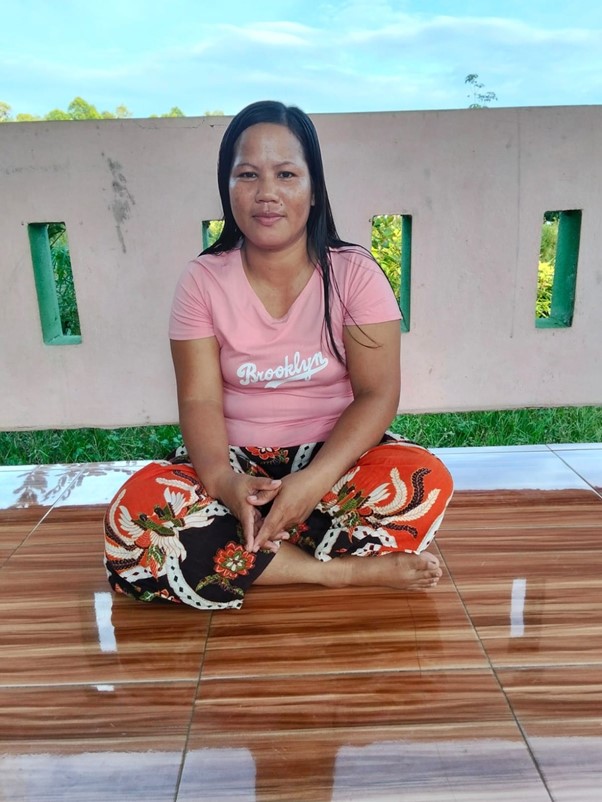
Before joining KehatiKu, Bu Uneng worked as a community health volunteer. She notes that her earnings from KehatiKu are significantly higher than her previous income, making it easier to support her family.
“I feel much calmer and more independent now, because besides my husband’s income, I can earn my own income every month through observations.”
Meanwhile, Pak Bantan, who worked as a village official and tended a small garden, now earns enough from verified observations to comfortably meet household expenses. He highlights the regular, direct payments as making KehatiKu a more reliable income source than his previous job. He also notes that KehatiKu fosters community spirit, with members pooling money to buy items that support their activities.
Both Bu Novi and Bu Gubah still work their previous jobs but use KehatiKu to supplement their income, saving for the future and their children’s needs while covering household expenses.
“KehatiKu gives me a more stable income than my other work, so I am calmer now that I can save money for my children’s futures,” says Bu Novi.
The income earned through verified observations is mainly used for household expenses, including children’s schooling and essentials. Observers also save money for future needs and support others in their village, reflecting the broader community benefits.
KehatiKu has also shifted perspectives on forest value. The forest is no longer seen solely as a source of timber, firewood, or building materials, but as a living ecosystem whose wildlife has measurable economic and ecological worth. As Pak Bantan explains:
“Every animal we observe plays an important role in maintaining nature’s balance, so I care more and want to help protect and preserve it alongside other villagers.”
“Thank you to KehatiKu. Besides protecting the forest, we can also earn income. I hope it continues,” concludes Bu Uneng.
As KehatiKu expands as a movement to make wildlife conservation more transparent while benefiting those closest to wildlife, so too does the possibility of a different future for the forests of West Kalimantan. One where communities are not only stewards of the rainforest, but beneficiaries of its protection. With every observation uploaded and every species recorded, KehatiKu is proving that when wildlife conservation creates real value for local people, protecting nature becomes not just possible but sustainable.
Personal stories and photographs in this article are shared with the explicit consent of the individuals involved