
Blog
Citizen Science Origins
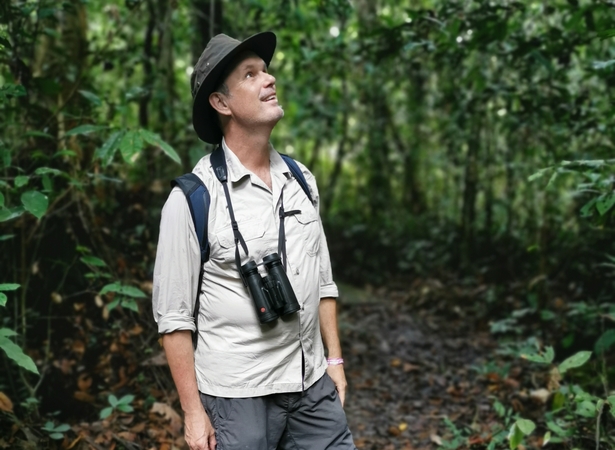
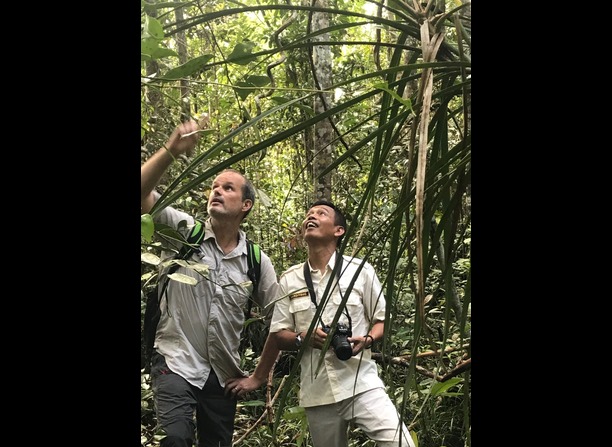
Borneo Futures Director, Erik Meijaard, has long been working on the idea of using citizen science to better inform adaptive biodiversity management. It all started in 2005 when, on a routine visit to train biodiversity experts at a timber concession, Erik realised that those who truly knew where and what the species were were not the experts, but the staff on the ground spending day in and day out in the forests.
This observation sparked a simple but powerful question: Why does so much of this knowledge go unrecorded, and how could we develop systems to collect it more effectively?
From here, Erik entered discussions with Borneo Futures Co-Director, Rona Dennis, to formalise a system whereby anyone could monitor biodiversity and contribute to a more comprehensive database of observations. At the time, Rona was working in environmental risk assessment for a multinational mining company with exploration sites in Indonesia. She took the concept to her seniors and partnered with a colleague to roll it out across the Indonesian project.
The trial was a huge success, surpassing expectations and acting as a crucial proof of concept. Senior management praised the initiative, recognising the benefit it brought for their sustainability commitments through widespread engagement with conservation and a record number of new species sightings. People began to get excited about conservation.
When the company unexpectedly closed its Indonesian projects, Rona and Erik were committed to citizen science and weren’t going to let it disappear with the loss of their major pilot. Instead, they turned to alternative avenues. Erik had been working with palm oil producer ANJ since 2011 and looked to integrate this approach into an oil palm landscape. The first attempt failed due to a lack of integration into company policy. However, with Rona’s expertise in creating formal systems, they tried again. In 2019, ANJ began deploying the project across its seven estates in Indonesia.
This project, which garnered great praise over five years of implementation, was dubbed PENDAKI, a name signifying care for the environment. The outcomes were remarkable: over 190,000 species sightings so far, including many new records, and strong staff engagement.
“The social benefits of PENDAKI demonstrated the importance of community engagement because, without it, biodiversity will always be a siloed activity or afterthought.”
This spurred a shift towards community-based systems. Initial interest was modest, but participation surged once incentives were introduced. Villagers were given tablets to view their own observations and told that if they recorded 600 sightings, they could keep the device, a target they initially doubted, but met with ease. When a payment system was later introduced, the numbers skyrocketed, with each village now contributing between 6,000 and 7,000 observations every month.
Now well established and thriving, the project’s ambition extends beyond collecting wildlife data to changing mindsets about biodiversity. Through its incentive programme, the aim is to make conservation more valuable than poaching. The long-term goal is to expand the model across communities and companies, and embed it into government programmes such as Dana Desa in Indonesia, where villages that protect biodiversity could receive premium payments.
With a target of 50 project sites by 2028, a milestone expected to be easily met, the project is attracting growing interest from both companies and communities. This balance is crucial, as it demonstrates that the approach is low-cost compared to traditional methods, yet generates far more data that can be transformed into near-real-time insights on the impact of conservation activities. Such immediacy is rare in the sector, where few investors in conservation ever see the direct effects of their actions. Understanding why people choose to participate, whether for financial reward, recognition, or the satisfaction of helping the planet, is key to sustaining this momentum.
The approach is scalable, adaptable, and targeted, “a radical redesign of conservation incentives at scale,” as its creators describe. “Just imagine, what if conservation paid better than poaching?”
Challenges remain, especially in keeping up with technological updates, but the potential is undeniable. Citizen science is proving to be a true innovation for conservation, transforming local knowledge into national impact and showing that when communities lead, biodiversity thrives.