
Blog
From Learning to Leadership: Safwanah’s Experience on the ASEAN-Australia Centre’s Emerging Leaders Program
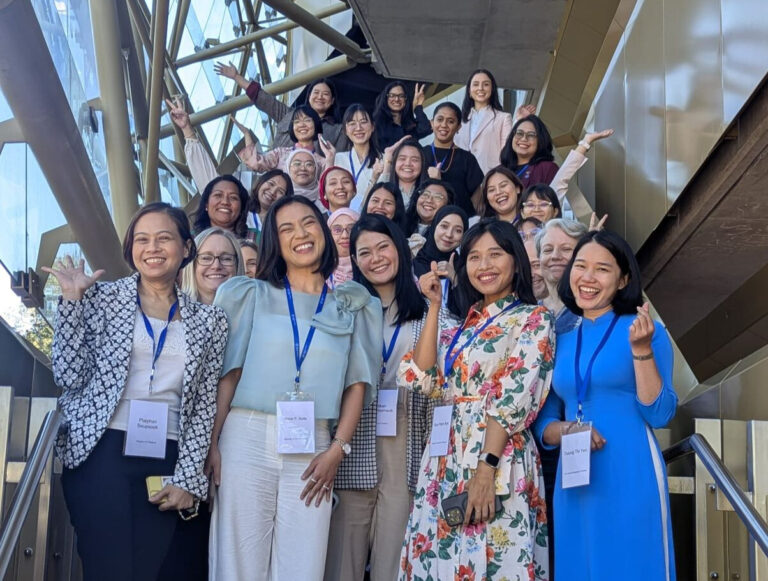
The ASEAN-Australia Centre’s Emerging Leaders Program and Short Courses bring together early-to-mid-career professionals from ASEAN, Timor-Leste and Australia to strengthen leadership, strategic thinking and regional networks in key sectors like the digital economy and sustainable agriculture.
Over three months, participants take part in virtual workshops and a one-week in-person program in Australia. The course blends practical learning, cultural exchange and engagement with experts, culminating in a return-to-work plan to help drive positive change in their fields and communities.
She extends her gratitude to the ASEAN-Australia Centre, in partnership with Griffith University, for organizing the program, with support from the Australian Government through the Department of Foreign Affairs and Trade (DFAT).
Last month, Safwanah Said, Director and Spatial Analyst at Borneo Futures, embarked on a journey to deepen her understanding of the role women play in STEM and develop her capacity to excel in her profession and act as a steward for equal representation in the field. While the in-person course lasted only a couple of weeks, Safwanah will carry forward the lessons learned to encourage current and future generations of women, including her young daughter, to recognise their worth and take up space in their chosen fields of expertise.
Safwanah first joined Borneo Futures in 2020 as a research officer with a focus on GIS and geospatial mapping. Since then, she has steadily progressed to become a confident spatial analyst, taking a leading role in land use change (LUC) analyses, spatial data modelling, and the mapping components of research studies and conservation projects. Her primary interest lies in conducting critical habitat assessments, where she can apply her diverse skill set to determine the natural and modified habitat of project areas. This work helps generate multi-factorial maps to guide biodiversity and sustainability assessments.
Her passion for GIS was sparked during her undergraduate studies in Environmental Sciences in Brunei Darussalam, where a short module on ArcGIS introduced her to the world of spatial data. Two semesters abroad at King’s College London offered her the opportunity to explore remote sensing, which further solidified her interest, although opportunities to pursue this field locally remained limited. Determined to continue, she later completed a Master’s degree in Water Resources and Environmental Engineering, with a thesis that placed GIS at its core. Despite this strong academic foundation, Safwanah entered a job market with few roles that allowed her to apply her specialised skills. Through persistence and dedication, she carved out a space for herself, bringing technical excellence and a unique perspective to her work in Brunei’s growing sustainability and conservation sector.
Safwanah first heard about the ASEAN-Australia Centre Short Course on Women in STEM through a Borneo Futures Director and her supervisor, Rona, who encouraged her to apply. With a full plate at work and young children at home, she hesitated at first. The opportunity sounded exciting but was it realistic? Could she make the time? Was she even the kind of candidate they were looking for?
Her uncertainty quickly gave way to disbelief when she received the acceptance email. Out of over 200 applicants from across Southeast Asia, only 20 women were selected, and she was one of them. That moment marked a turning point, not just in her career but in how she viewed herself: as a representative of Brunei, a woman in STEM, and a role model in her field.
The application process was rigorous. Safwanah completed multiple written components and was later invited to an interview that pushed her to reflect on the state of STEM in Brunei, particularly for women. She spoke honestly about how, despite the strong quality of education in Brunei, there are few pathways for progression after graduation, especially in technical fields such as spatial analysis.
She also highlighted the lack of visible local role models. Most of the technical expert roles in STEM fields are often held by expatriates. The absence of visible Bruneian women in technical roles limits what young girls believe is possible. These reflections were not easy to voice but they were honest, and they resonated with the selection committee.
Her application and interview emphasised not only her technical expertise and leadership potential but also her deep understanding of the barriers women in Brunei face in STEM fields, and her determination to help change that.
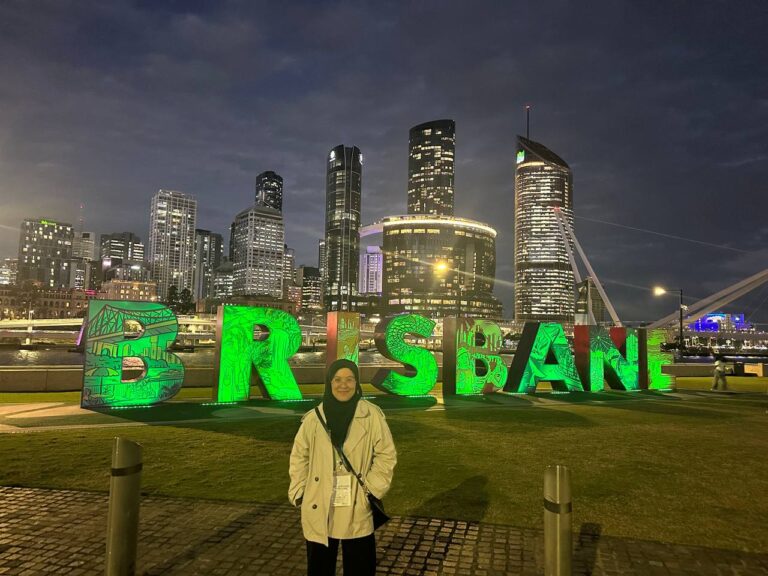
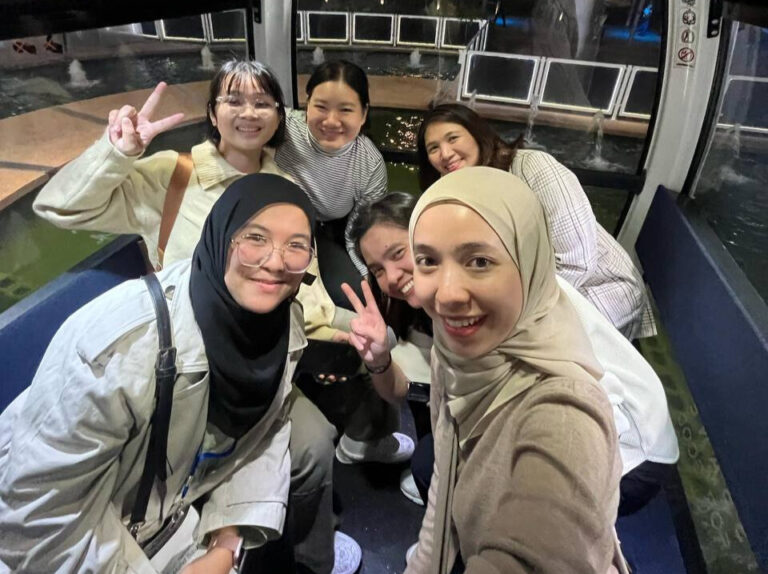
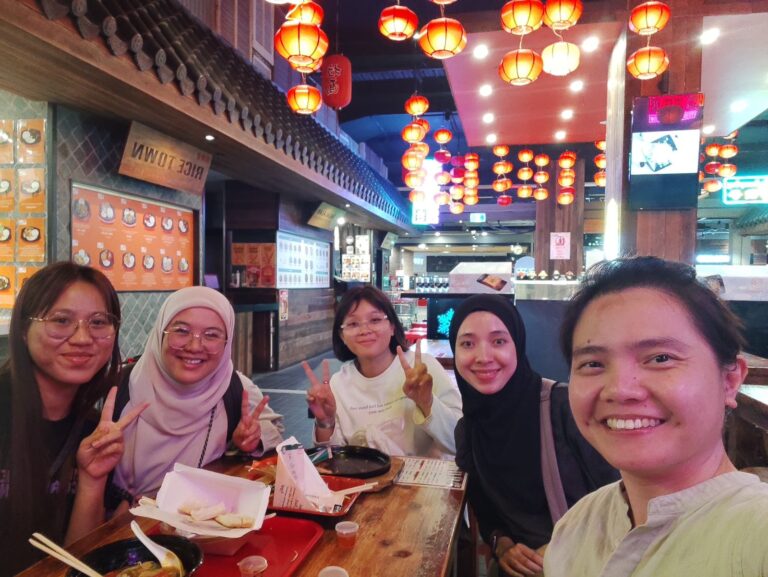
Over the two-week programme, Safwanah travelled to Brisbane, the Gold Coast and Canberra; each city offering a unique perspective on women’s roles in STEM. In Brisbane, she attended sessions on global gender disparities in STEM, leadership, machine learning and personal branding, which left her feeling both empowered and challenged. On the Gold Coast, hands-on exposure to cutting-edge STEM applications, from 3D printing to marine biology, fuelled her excitement for real-world impact. In Canberra, policy and science converged through site visits and key presentations, including a transformative session by Science in Australia Gender Equity (SAGE).
Throughout, Safwanah was struck by the systemic support available for women in Australia and she returned with renewed motivation to advocate for greater inclusion in Brunei.
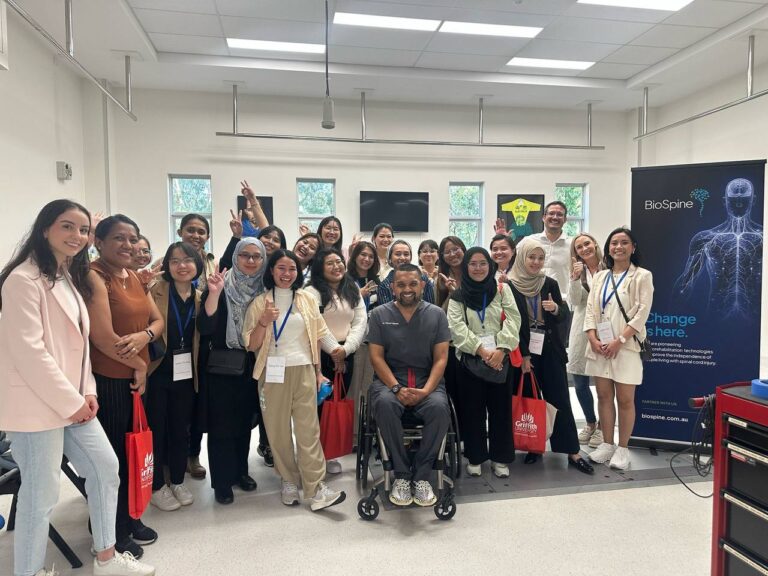
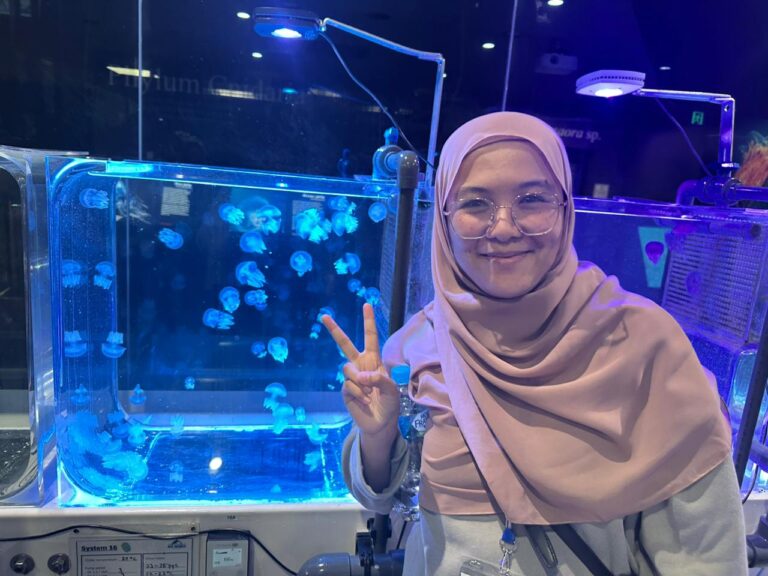
She described her time in Australia as eye-opening and empowering, both professionally and personally. The programme’s engaging, workshop-style sessions, covering leadership, personal branding, and gender equity in STEM, pushed her beyond her comfort zone and encouraged her to find her voice. Highlights included visits to cutting-edge labs such as ADaPT, the BioSpine Lab and the Sea Jellies Research Laboratory, where she saw first-hand how innovative technologies are applied in biomedicine and environmental science. She was especially struck by the emphasis on inclusivity in Australian STEM programmes, an approach less commonly emphasized in Brunei, and how this ethos helps to drive innovation. The presentation by SAGE was particularly impactful, shifting her perspective from the challenges of entry into STEM to the deeper, systemic issues around retention and career progression.
Safwanah returned inspired to advocate for structural changes in Brunei, particularly as the country moves towards developing a national action plan to empower women in leadership. As part of her return-to-work programme, she has already initiated conversations with the women at Borneo Futures to identify local barriers to access, and she hopes to establish a national Women in STEM Forum in Brunei to continue and expand this dialogue.
To close our interview, I asked Safwanah what advice she would give to young women in Brunei who are interested in pursuing careers in STEM. After pausing to gather her thoughts, she said:
‘When it comes to STEM, you must always be looking to grow. STEM is not a subject area you “complete” once you’ve earned a degree or secured a job. There are always new ways to evolve and keep learning. To excel in STEM, you need to be willing to take initiative, be innovative, and stand up for your passion and beliefs.’